My Store
Ruby Moon Hyacinth Seeds
Ruby Moon Hyacinth Seeds
Couldn't load pickup availability
10 Seeds
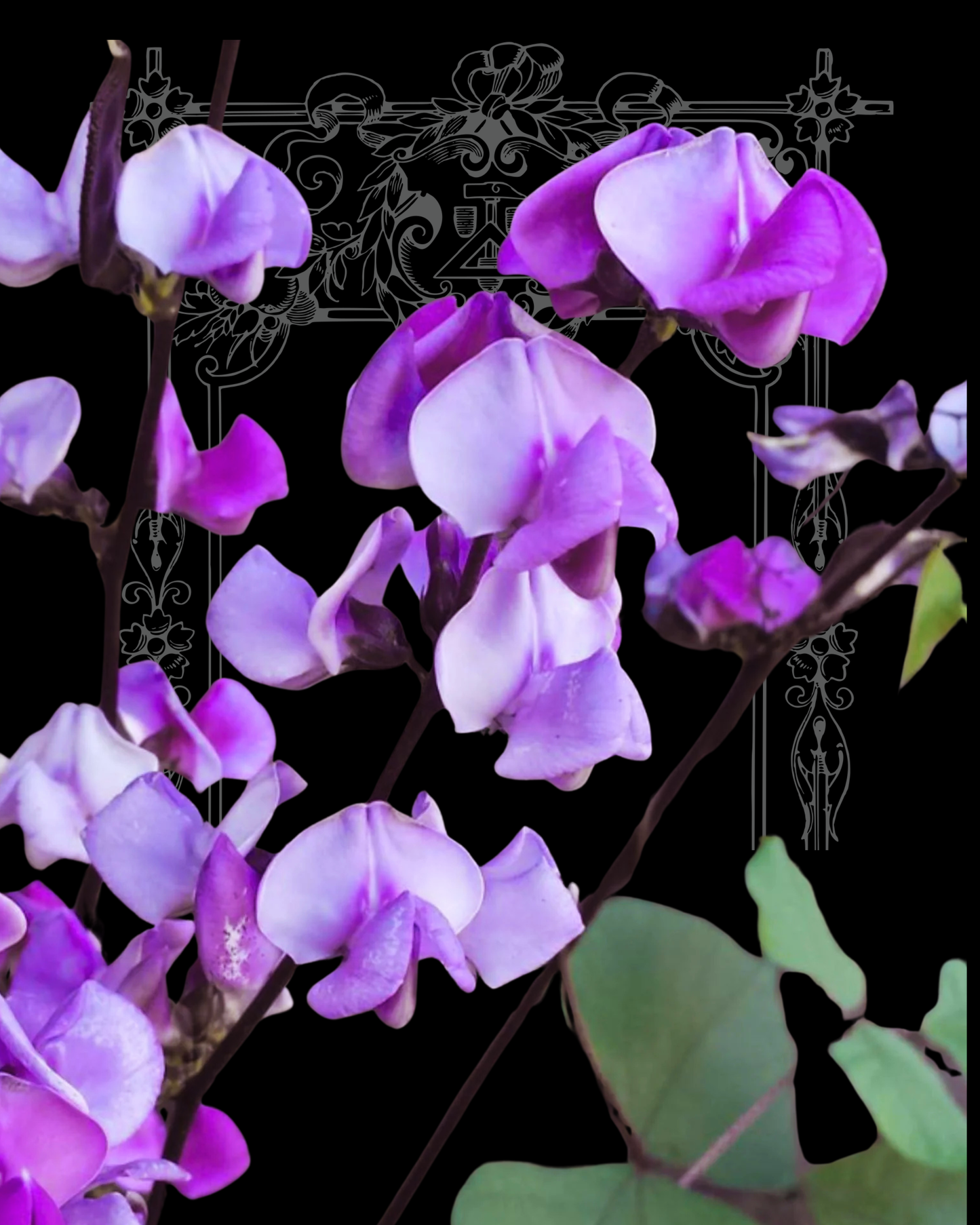
Lablab purpureus ‘Ruby Moon’ (hyacinth bean, ruby moon lablab) is a vigorous, tender perennial vine grown as an annual in most climates. Valued for its glossy purple foliage, deep‑violet pea‑type flowers and showy purple pods, this cultivar adds vertical color on trellises, arbors, fences and containers. The species is native to tropical Africa and southern Asia and has a long history as both an ornamental and a crop/forage legume.
Plant ‘Ruby Moon’ in full sun for best foliage color and prolific flowering; it will tolerate light afternoon shade but flowers and pod color are strongest in sun. It prefers fertile, well‑drained soil amended with compost and benefits from regular moisture during establishment; avoid waterlogged conditions. Because it is a legume, it performs well with moderate fertility and can contribute nitrogen to the soil.
Seeds have a hard coat and benefit from pre‑treatment to speed germination: scarify or nick the seed coat and soak seeds overnight, or sow directly after soaking. Start indoors 3–4 weeks before the last frost or direct‑sow outdoors once soil has warmed; germination typically occurs in 7–14 days at warm temperatures (70–85°F / 21–29°C). No cold stratification is needed. Provide sturdy support at planting—vines are fast climbers.
Vines commonly reach 6–10+ feet (1.8–3 m) tall with a spread determined by the support system; space plants about 12–18 inches (30–45 cm) apart along trellises or allow multiple plants for dense coverage. In frost‑free areas it can act as a perennial (USDA zones ~9–11); elsewhere it’s grown as an annual.
‘Ruby Moon’ is primarily ornamental—excellent for vertical color, screens and large containers—but also attracts pollinators. Pods and young beans are eaten in some cuisines after thorough cooking (note: raw or undercooked seeds may be toxic—follow proper preparation guidelines and local advice). It’s also useful as a cover crop/green manure and as a wildlife‑friendly choice in mixed plantings.